
Adjusting Otomi Designs for Heavy Denim
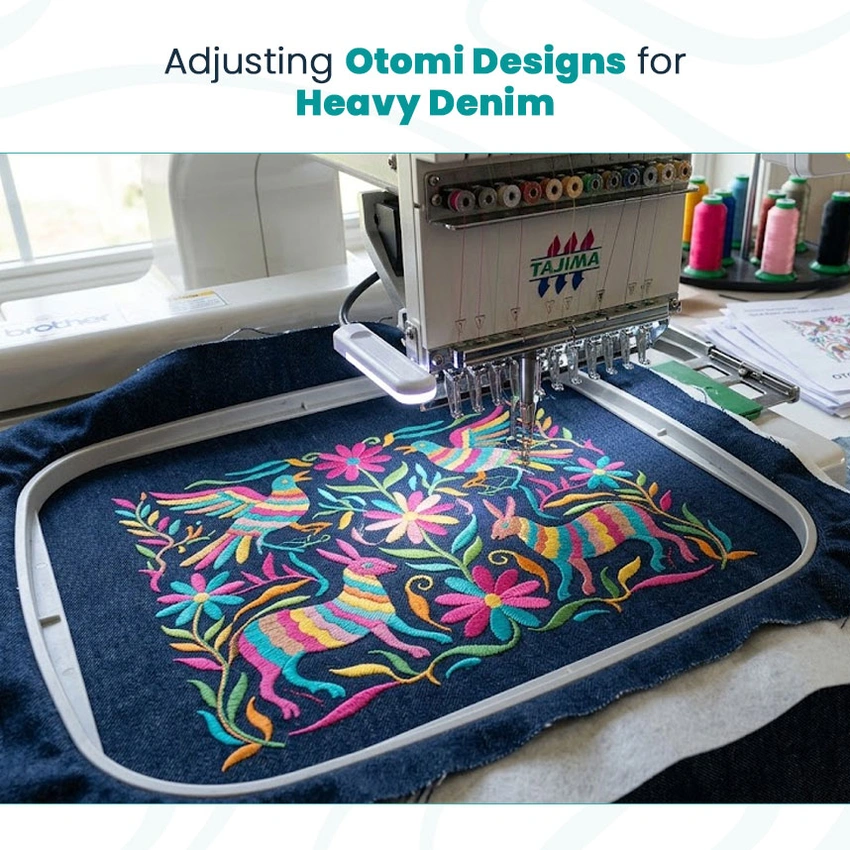
Denim has a firm structure, but that does not mean every embroidery file will stitch cleanly on it. The fabric can resist the needle and make dense designs feel heavy. When placing an otomi embroidery pattern on denim, the digitizing plan should account for the fabric from the beginning.
Consider the Denim Weight
Lightweight denim behaves differently from heavy jeans material. Before digitizing, consider how thick and stable the fabric is.
Important factors include:
- Denim weight
- Final design size
- Thread thickness
- Stitch density
- Stabilizer choice
- Number of color changes
These details affect how the finished design sits on the fabric.
Keep Dense Areas Under Control
Otomi-inspired artwork may contain several animals, flowers, and decorative shapes close together. Filling every area with heavy stitches can make the denim stiff.
Use appropriate density for each section. Leave some fabric visible where the artwork has open spaces.
Use Stitch Types Carefully
Larger shapes can use fill stitches, while narrow borders may work better with satin stitches. Running stitches can handle fine decorative lines.
Stitch direction also matters. Following the curves of flowers, leaves, and animals helps the design look smoother.
Strengthen the Design Without Overloading It
Underlay provides support beneath the top stitches. Proper compensation can also help maintain shape when the fabric pulls during stitching.
Avoid adding unnecessary layers just because denim is thick. Too much stitching can increase bulk without improving the appearance.
Test the File on Denim
A test sew-out is especially useful before production. Stitch the design on denim that is similar to the final item and inspect the result.
Check for:
- Puckering
- Uneven coverage
- Heavy areas
- Loose stitches
- Distorted outlines
Mexican embroidery patterns can look excellent on denim when the digitizing is designed around the material. Careful density, stitch direction, sequencing, and testing help create embroidery that remains clean and durable through regular use.
🔗visit https://collectlo.com/blog/6aaa63d1886364969f5b5e5f 🔗